
 Thich Nhat Hanh is among the world’s most respected Zen Buddhist monks. He’s the author of over 70 books on what he calls the art of mindful living. In this post you’ll discover four powerful practices taught by Thich Nhat Hanh which will allow you to live a more mindful, and happier, life.
Anything Can Be the Object of Your Mindfulness
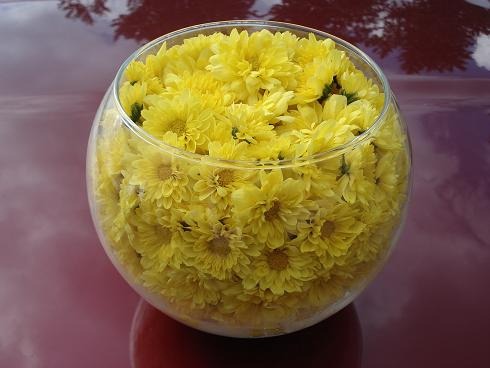
Thich Nhat Hanh explains that God is happiness, and God is always available. This means that we can be happy at any time. The way to access the Kingdom of God is through mindfulness. With mindfulness and concentration you can get in touch with the Kingdom of God as expressed in the wild bamboo tree, or in the yellow chrysanthemums, at any moment.
He adds that if you breathe in mindfully, and you’re aware of your in-breath, you bring your mind home to your body. When your mind is with your body you are fully in the here and now. When you are fully present you can get in touch with that chrysanthemum, or with the full moon, and these belong to the Kingdom of God.
Thich Nhat Hanh defines mindfulness as follows: “Mindfulness is the capacity to be aware of what is going on, and what is there. The object of your mindfulness can be anything.” You’re always mindful of something. You can look at the sky, breathe in, and say:
“Breathing in, I am aware of the blue sky.”
At that moment you are mindful—or aware–of the blue sky; the blue sky becomes the object of your mindfulness. Then you can add the following: “With each breath I come back to the present moment.”
You can turn to look at a tree, or at someone walking by, and do the same thing. In addition, Thich Nhat Hanh explains that you can be mindful of your eyes which have the ability to see the world around you: you only need to open your eyes in order to enjoy a paradise of forms and colors.
Also, you can be mindful of your heart, which functions normally, which is a good thing. Focus on your heart as you breath in, and then smile at your heart as you breathe out. According to the Buddhist monk, through mindfulness we can appreciate the beauty and wonder of each moment of life.
By being aware of your actions, you can enjoy your life while you drink tea (mindfulness of drinking), or while you wash the dishes. All of this means that you can stop running after things which you think will make you happy. By being aware of what you already have–and of the beauty that surrounds you–you can be happy right here, right now.
When you put your focus on something in the present, such as your in-breath and your out-breath, you are releasing the past and the future. More specifically, you are releasing the sorrow and regret of the past, and the fear and uncertainty of the future. Doing things mindfully allows you to be in the here and the now at all times, which means that you’ll be living deeply every moment of your daily life.
- Breathing should be pleasant.
- Walking should be pleasant.
- Sitting should be pleasant.
Once we realize that through mindfulness we can connect with the Kingdom of Heaven–or with happiness–at any moment, we gain the ability to generate happiness and joy at any time.
Thich Nhat Hanh Talks About the Ego
In the YouTube video below, Thich Nhat Hanh explains that his right hand has written many poems, while his left hand hasn’t written any. However, his right hand doesn’t have a superiority complex. It doesn’t turn to the left hand and say: “I write poetry and you don’t. I’m better than you are. You, left hand, are good for nothing.” At the same time, his left hand doesn’t have an inferiority complex. It doesn’t feel bad about itself because the right hand writes poetry and it does not.
Thich Nhat Hanh goes on to say that he was trying to hammer a nail into the wall but he missed the nail, and he ended up hitting the thumb on his left hand with the hammer. His right hand immediately put down the hammer and held the left hand very tenderly, as if it was taking care of itself.
The right hand did not then say to the left hand: “Left hand, remember that I, the right hand, have taken good care of you. You have to pay me back some time in the future.” At the same time, the left hand didn’t say: “Right hand, you’ve done me a great harm. Give me the hammer. I want justice.” The two hands know that they’re together; they know that they’re in each other’s care.
Thich Nhat Hahn Talks About Anger
In the interview shown in the video below, Thich Nhat Hahn speaks about anger. He explains that we should hold our anger in a tender way, like a mother holding her baby. When a baby starts to cry and the mother picks him up and holds him tenderly, the baby feels the energy of tenderness and begins to calm down. In the same way, your anger feels itself being embraced by mindfulness and begins to quiet down.
Another way of saying “loving kindness” is “mindfulness”. Every time the energy of anger is present, we should invite the energy of mindfulness to be present as well, so that it can take care of the anger. We invite mindfulness to be present through mindful breathing. When you breathe mindfully you’re not ignoring anger, you’re mindful of your anger; you’re taking care of your anger. Loving kindness is a part of us, but so is anger; so it’s basically one part of us taking care of another.
Say the following to yourself as you breathe: “Breathing in, I know that I am angry. Breathing out I am taking good care of my anger.” This is embracing anger with the energy of mindfulness. If we do this for some time, there will be a transformation in the heart of the anger.
To illustrate his point, Hahn uses the metaphor of flowers that are closed in the morning. When the sun shines on them, penetrating deeply into the flower, eventually the flower opens to the sunshine. Our anger is like a flower that needs the care of sunshine, that is, it needs mindfulness.
Suffering Comes From the Nature of Our Perceptions
Thich Nhat Hanh explains that most of our suffering comes from the nature of our perceptions. He indicates that in our daily life we are seldom free from our feelings, emotions, wrong perceptions, and mental formations. We’re like a leaf floating on the ocean, with the waves pushing us back and forth. We don’t have sovereignty over the situation; we allow ourselves to be pulled away by our feelings and perceptions.
He adds that we need to lead our own lives, instead of allowing our lives to be led by the circumstances that surround us. That’s why it’s so important to master the situation and master ourselves; we do this by mastering our feelings and our perceptions. (Source).
Thich Nhat Hanh explains that in Buddhism, Nirvana is the cessation of all suffering. At the same time, as explained above, our suffering comes from our wrong perceptions. The practice of meditation removes our wrong perceptions, so that we can be free of the afflictions and the suffering that arises from wrong perceptions.
As an example of a wrong perception, Thich Nhat Hanh talks about death. We may be afraid of dying, and thinking about death may cause us suffering, because we have a wrong perception of death. People tend to think of death as nothingness. However, the Buddha taught that birth and death are simply notions. The fact that we think they’re true creates a powerful illusion that causes our suffering.
You look at a cloud in the sky. Then it rains and you no longer see the cloud. You think that the cloud no longer exists. However, if you look closely, you can see the cloud in the rain. It’s impossible for a cloud to die: it can become rain, snow, or ice, but the cloud can’t become “nothing”. That is why the notion of death cannot be applied to reality. There’s a transformation, there’s a continuation, but you cannot say that there is death.
In this same way, you can examine all of the perceptions that bring you suffering and realize that these perceptions are wrong. In addition to meditation, this is how you remove suffering. Nirvana can be translated as “freedom from wrong views”. (Source).
Conclusion
To conclude, here’s a beautiful quote by Thich Nhat Hanh:
“”Mindfulness helps you go home to the present. And every time you go there and recognize a condition of happiness that you have, happiness comes.”
— Thich Nhat Hanh
Related Posts:
1. Srikumar Rao On Happiness – Four Exercises That Will Make You Happier
2. 37 Tidbits of Higher Consciousness
3. 65 Happiness Quotes
4. Harvard’s Most Popular Course: Tal Ben-Shahar on How to Be Happier
I Recommend:
1. How to Live Your Best Life – The Essential Guide for Creating and Achieving Your Life List
2. Make It Happen! A Workbook for Overcoming Procrastination and Getting the Right Things Done
3. How to Be More Creative – A Handbook for Alchemists
4. The One-Hour-A-Day Formula: How to Achieve Your Life Goals in Just One Hour a Day
 Marelisa Fabrega is a lawyer and entrepreneur. She holds a Bachelor of Science in Business Administration from Georgetown University in Washington, D.C., as well as a Juris Doctor from the Georgetown University Law Center. You can learn more about her


Comments on this entry are closed.
That’s beautiful!
I love the idea of holding my anger like a mother holds a baby. Our anger needs love too!